
Applications
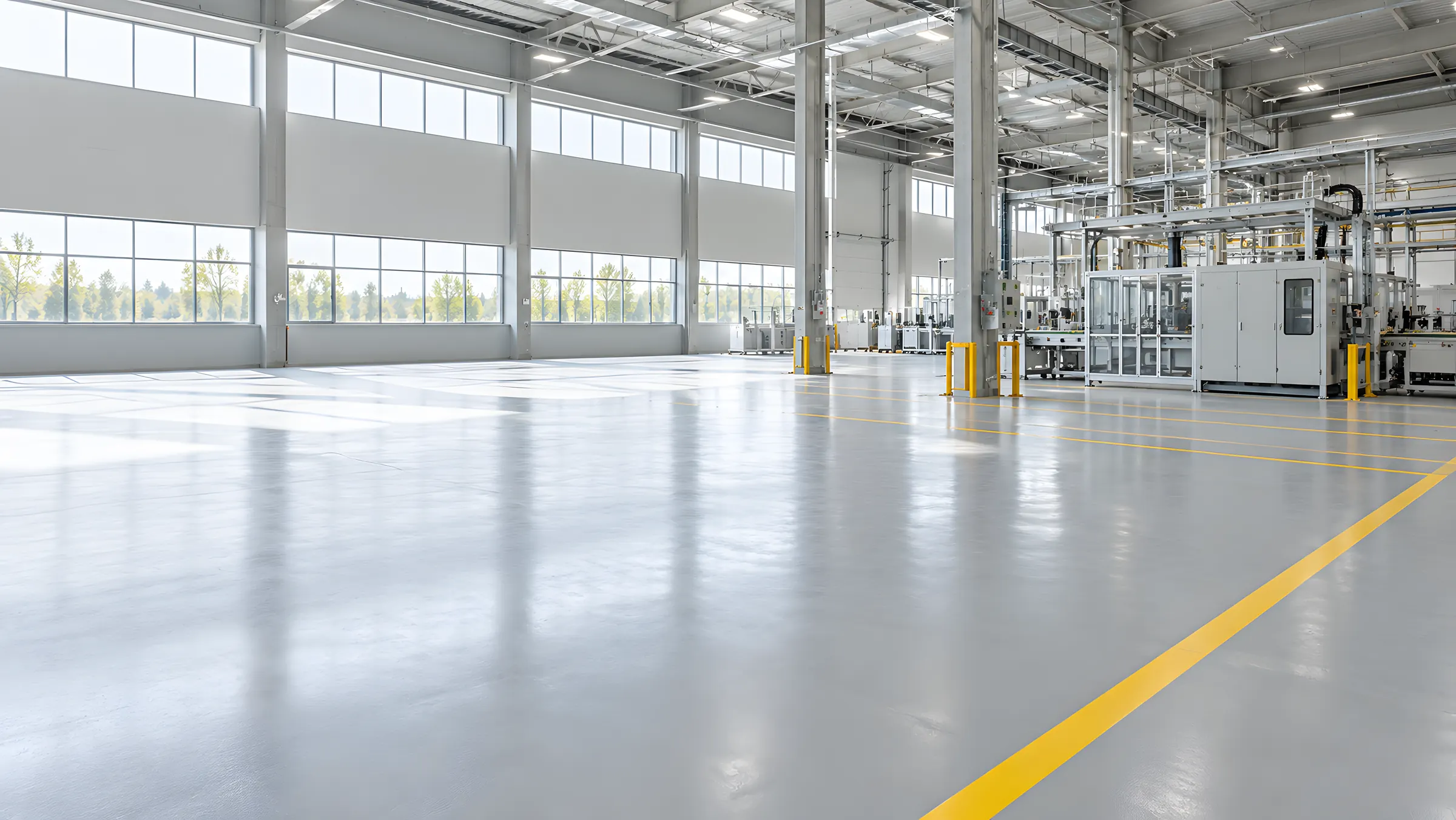
Warehouse and factory floors that take forklifts.
illustrationFor warehouses and factories with forklift traffic, specify a self-leveling epoxy system of at least 2 mm over a sound C25+ concrete slab: epoxy primer, sand-filled intermediate coat and self-leveling topcoat. For light trolley traffic, 1 mm self-leveling or a 0.3–0.5 mm roller-coat system is enough.
Recommended system
What we specify.
| Layer / option | Product | Why |
|---|---|---|
| Marking | Line marking in a contrasting RAL | Aisles, loading and safety zones |
- 01Self-leveling topcoatTL-5013 · 1–3 mm
- 02Intermediate coat + quartz sandTL-5008-B
- 03Epoxy primerTL-5008-A
- 04Ground concrete slabC25+, moisture ≤ 8%
Checklist
What decides whether it lasts.
- Slab strength C25 or better and moisture ≤ 8%
- Grinding or shot-blasting — never coat over laitance
- Sanded intermediate coat for flatness under racking
- 15 days before forklifts run on the new floor
Examples
Floors and finishes like this.
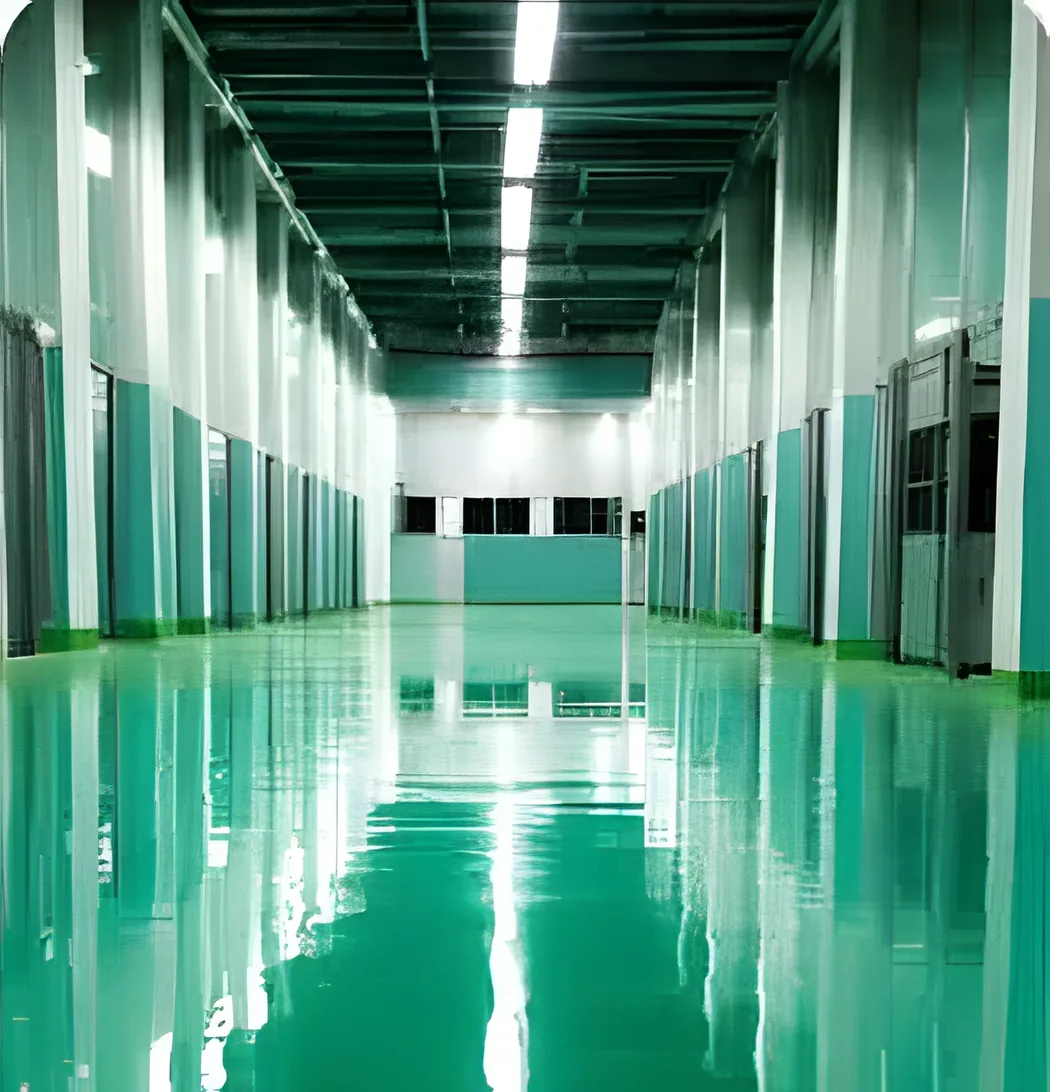
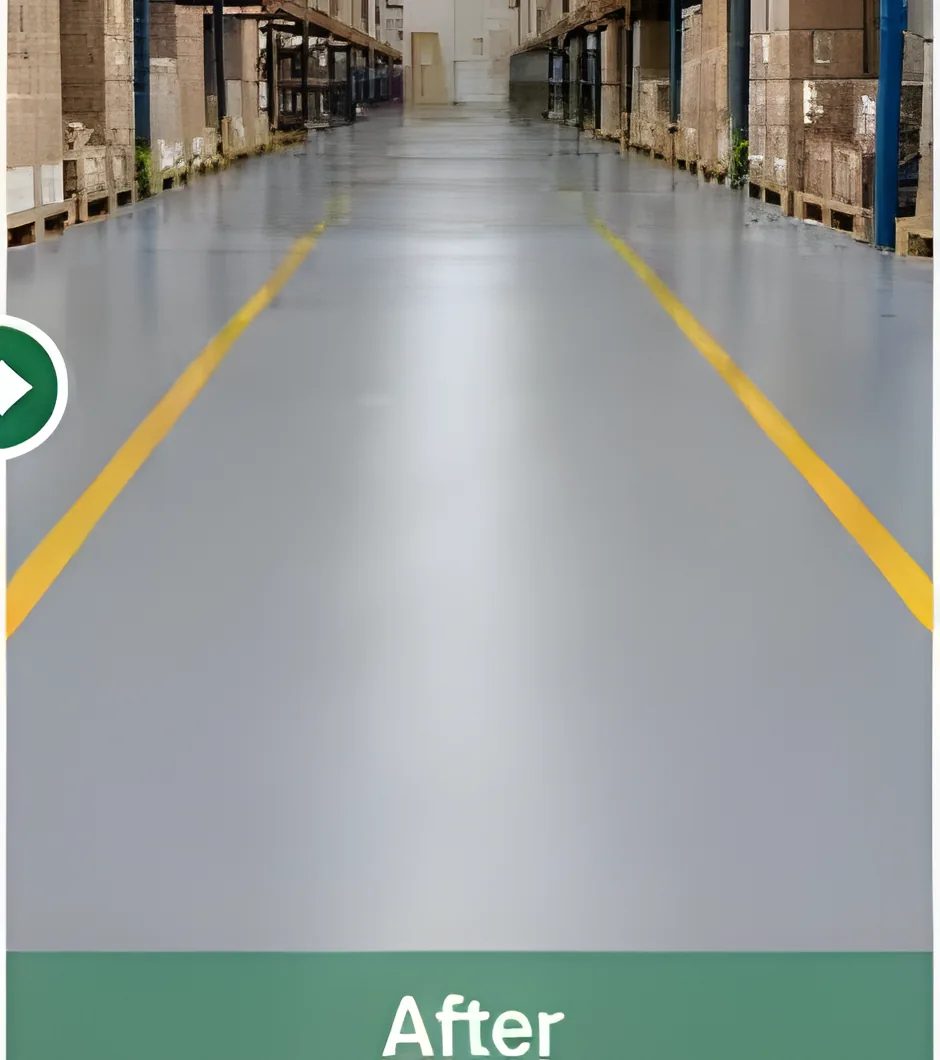
Project references and product photos supplied by TUOPU; renderings are labeled.

Questions buyers ask
How thick should a warehouse epoxy floor be?
At least 2 mm of self-leveling build for regular forklift traffic; heavier loads or steel wheels may need more.
How long is the warehouse out of use?
Typically 4–5 days for installation plus 15 days of curing before heavy traffic. Large sites can be done in phases.
Related
Keep exploring


Get a quote
Tell us about your project.
Tell us the surface, intended use, area and destination. We confirm a suitable system, current technical documents and quotation.