
Short answer
- Real stone paint is a thick water-based coating of acrylic emulsion and natural stone granules, sprayed to look like granite or sandstone.
- The key quality variable is emulsion (binder) content — TUOPU supplies grades TL-402A/B/C.
- Always use it as a system: alkali-resistant primer, stone coat, clear topcoat.
What is in it
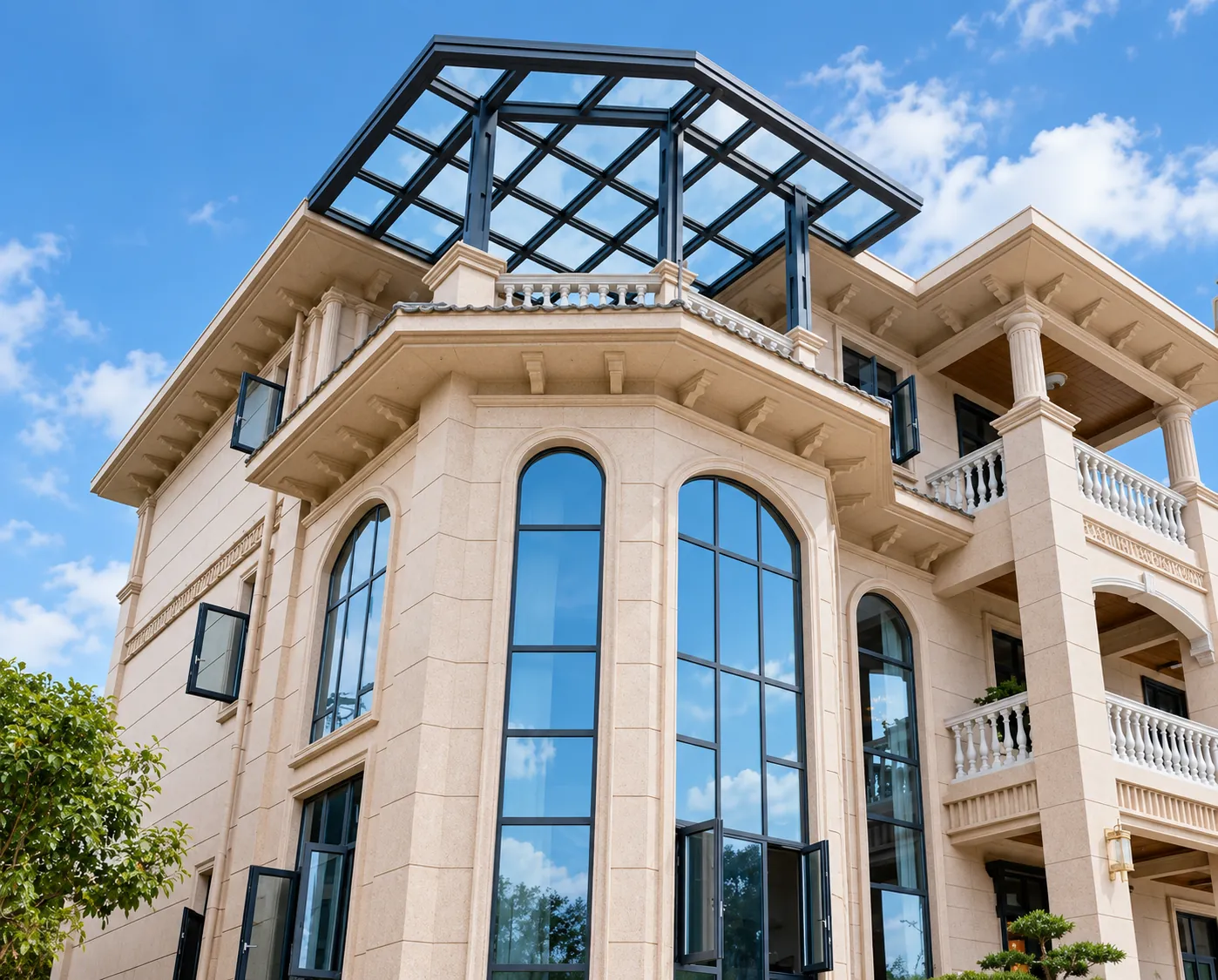
Real stone paint combines natural colored stone granules with an acrylic emulsion binder and additives. Because the color comes from real stone rather than pigment, it does not fade the way paint can, and the texture reads as stone from a few meters away.
Grades: why emulsion content matters
| Grade | Emulsion | Use |
|---|---|---|
| TL-402A | 11% | Budget projects, dry climates |
| TL-402B | 14% | Most residential and commercial facades |
| TL-402C | 16% | Humid, coastal and freeze-thaw climates; landmark buildings |
More binder holds the stone more firmly and resists water better. Cheap real stone paint usually cuts emulsion, which shows up years later as powdering and stone loss.
The system
- Alkali-resistant sealing primer in the stone’s base color — protects against alkali in new render and hides gaps between granules.
- Real stone coat, sprayed with a hopper gun; tape grid lines for a block-stone pattern.
- Clear topcoat — reduces dirt pick-up and water absorption and deepens the color.
Real stone paint vs stone cladding
| Real stone paint | Stone cladding | |
|---|---|---|
| Weight on the building | A few kg per m² | Tens of kg per m² |
| Fixings | None — sprayed onto render | Anchors and sub-frame |
| Curves and details | Follows any shape | Limited, costly cutting |
| Look up close | Granular stone texture | Real stone slabs |
Colors

Planning a facade? We send sample boards in your colors within 15 days.